
Examples of stoves: good and bad.
The basis of all load securing is to prevent the load from moving. If it is not possible to secure the load in place, you should use straps or chains to prevent the load from moving.
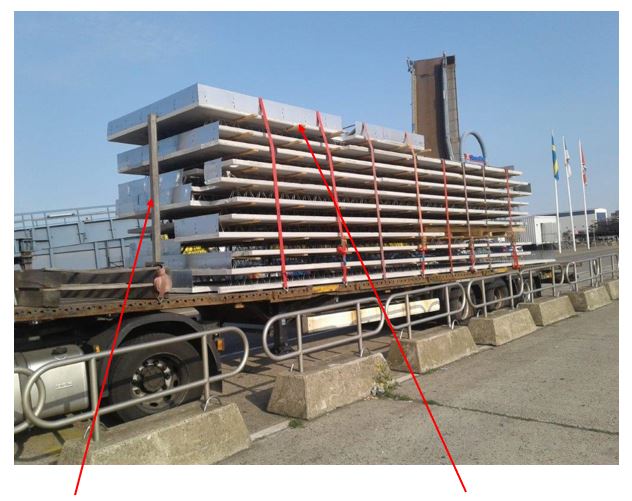
The load is secured forward by lashing. Metal plates make it difficult to use straps.
It’s always best for the top plate to be the smallest (the hardest to close), since it weighs the least—meaning it requires the least weight to hold it in place with a chain.
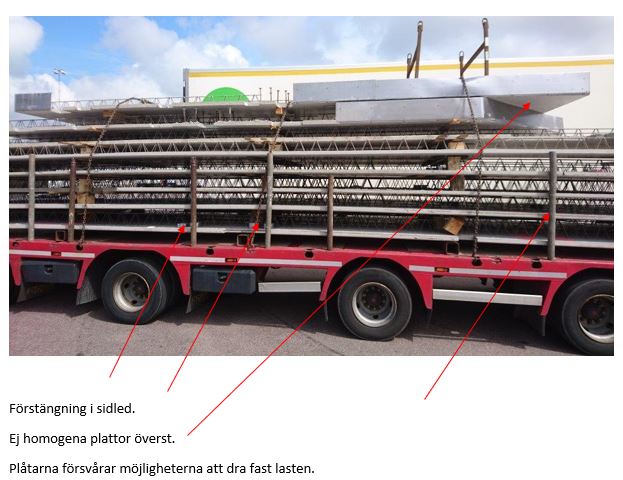
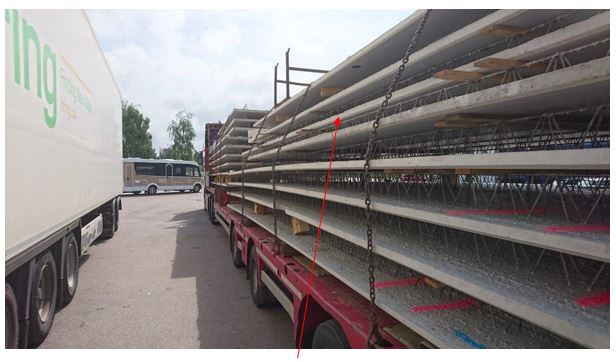
Tiles that are not aligned on the left or right side may shift. The tiles must therefore be tightened very securely, which can damage them.
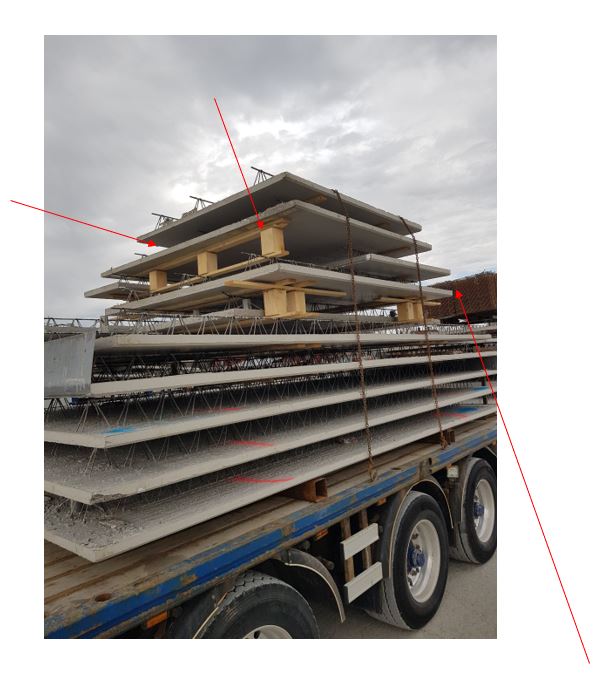
It doesn’t take much for these slats to start moving, for example, when braking. The blocks can bend, and it is impossible to secure the load against forward movement.
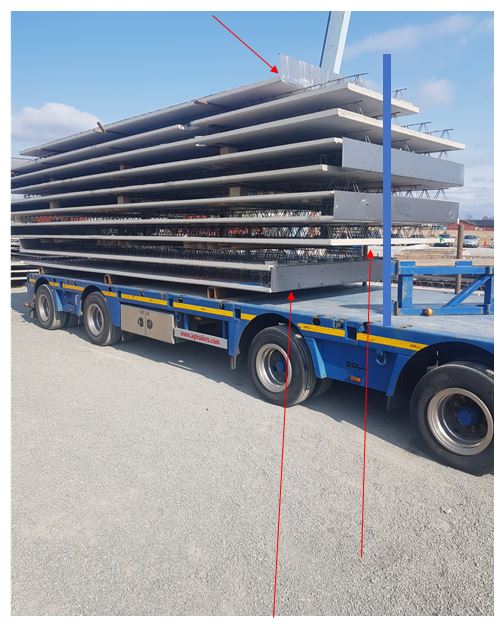
Tiles that aren’t laid in a straight line are very difficult to grout.
Bricks can easily fall, as shown in the pictures below.
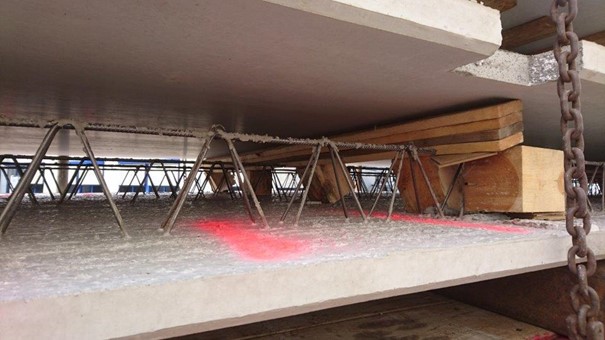
Examples of how blocks can move during transport.
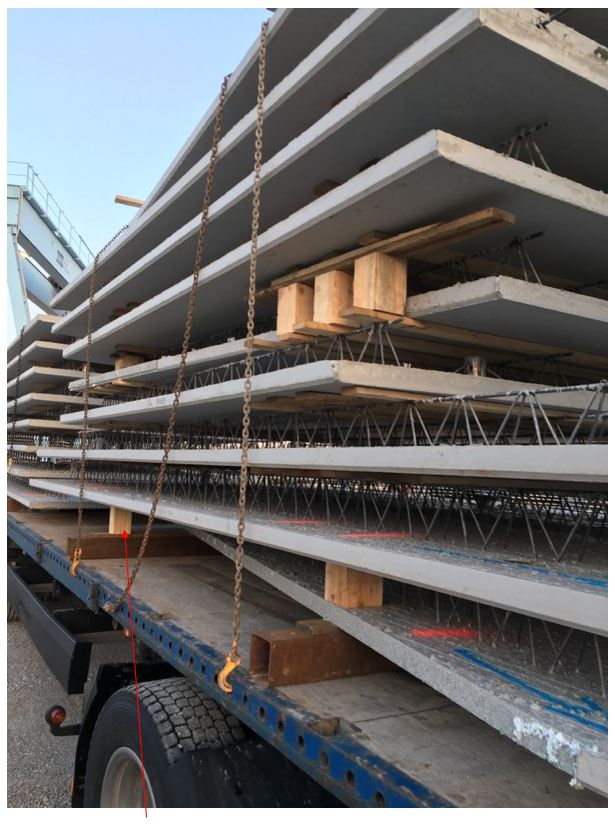
Stacking blocks directly on a beam is extremely dangerous. If that block shifts, the entire load could come crashing down.
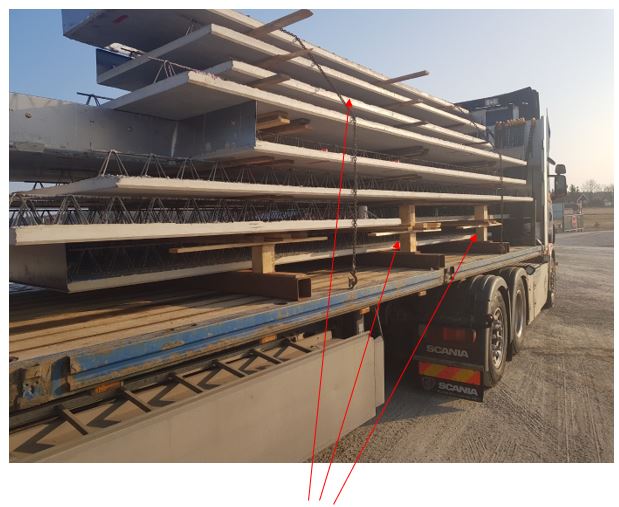
Double-blocking directly on the beam and pyramidal stacking.

